Hiragana practice – 5 steps to read and write in 30 days
Start practising hiragana with a 10–15 minute daily routine and a 5-step plan. Includes a comparison table and how LinguaPair's alphabet-first A0 lessons fit into your schedule.
Start by practising hiragana with five short, repeatable actions you can do in 10–15 minutes a day: trace, listen, write, read aloud and review with timed recall. LinguaPair makes the first two steps exact: the A0 course begins with stroke-trace exercises and audio for every hiragana sign, and A0–A1 is free so you can try the alphabet units without paying; Premium is USD 9.99 per month or USD 59.99 per year if you choose to unlock more (source: https://linguap.com/en/pricing). Below you get a quick checklist, a comparison table, the step-by-step routine, how LinguaPair implements each step starting from the alphabet, common mistakes, and a short FAQ.
In short – key takeaways
Quick start – Try the alphabet A0 lessons free: open the first free lesson in LinguaPair to trace and hear every hiragana sign. The app is made by the team behind this site.
Daily micro-session – 10–15 minutes per day: 3 minutes tracing, 5 minutes writing from memory, 2 minutes reading aloud, 5 minutes spaced review.
Measured practice – Use 10 new signs per day max and follow an SM-2 style review schedule; LinguaPair limits new words to 10/day in its spaced system.
One honest limit – LinguaPair's A0 lessons focus on hiragana and the first kanji comes later in A1; if you want immediate kanji drills, add a dedicated kanji workbook.
If you prefer textbooks – reserve them for handwriting practice and reference; use LinguaPair for guided audio, stroke order, placement test and CEFR alignment.
How should I break down a 10–15 minute daily session for hiragana practice?
Split your session into five focused tasks: trace with stroke guides (3 minutes), listen and repeat whole-row audio (2 minutes), write from memory on paper (5 minutes), read aloud two short example words (2 minutes), and do a 1–3 minute timed recall quiz. Use no more than 10 new signs per day; that keeps daily review under 15 minutes because the spaced schedule brings each new item back at 1 minute, 10 minutes and 24 hours. For handwriting, use squared paper and write each sign five times with intent. If you rent a week-long course or travel, keep the same 10-per-day cap – it prevents overload and makes reviews finish within a minute for each item. LinguaPair provides stroke tracing and timed audio that matches this rhythm.
What does "starting from the alphabet" change in practice, and how does LinguaPair use it?
Starting from the alphabet means you learn script, sound and immediate word examples together, not separately. LinguaPair places each hiragana sign in A0 with three linked actions: trace the sign over stroke guides, hear the native audio, then meet the sign in a 1–2 word example. Each unit contains six lessons and short 10–15 minute lessons; A0 and A1 are free so you can follow the alphabet route without cost. Use the free placement test and CEFR levels to start at the right point if you already know some signs (placement test page: https://linguap.com/en/level-test/japanese). The advantage is fewer isolated flashcards and more context: every saved word moves to the spaced repetition trainer automatically, so your writing practice ties to vocabulary.
Which option fits a solo learner best right now?
Option | Who it suits | Key number | Main drawback |
|---|---|---|---|
Self-drill with a notebook and audio clips | Learners who prefer pen-and-paper only | 10 new signs/day cap recommended for 15-minute sessions | No guided stroke feedback or integrated review schedule |
LinguaPair A0 alphabet path | Solo learners who want guided tracing, audio and spaced reviews | Free A0–A1 plus Premium USD 9.99/mo to unlock A2–C2 (source: https://linguap.com/en/pricing) | Less intensive kanji focus in A0–A1; kanji begins in A1 |
Textbook + workbook | Learners who want dense handwriting practice and reference charts | Use one new row (5 signs) per study session for neat handwriting | No automated audio highlighting or instant spaced scheduling |
LinguaPair's row in the table links to its alphabet page and shows the price fact for Premium and the A0 free access: follow the alphabet A0 lessons in LinguaPair to trace, hear and review hiragana.
How many repetitions and reviews do I need to retain hiragana long-term?
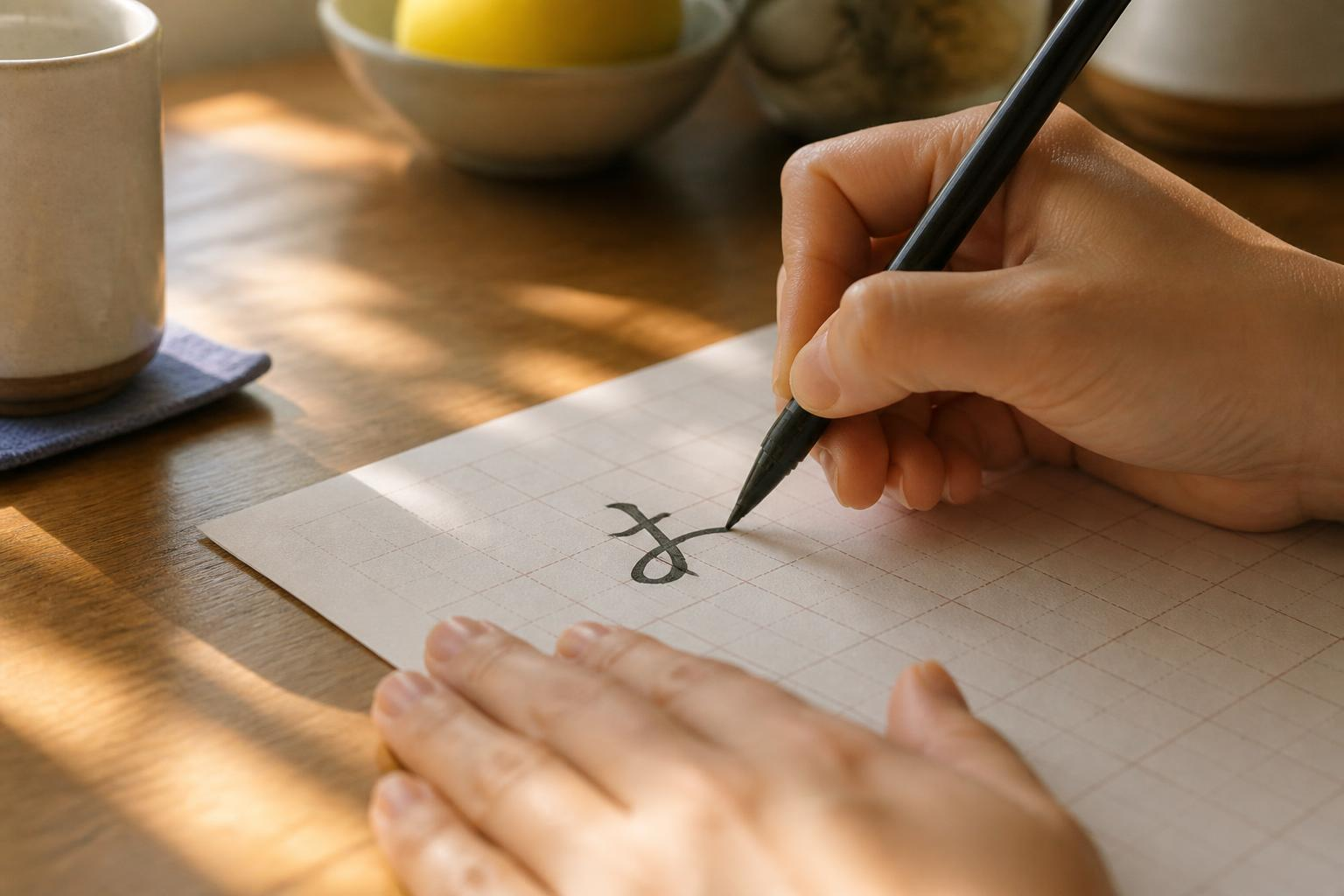
Aim for five immediate handwriting repetitions, spaced vocal recall at 10 minutes and again at 24 hours, then SM-2 intervals (about a few days, a week, a month). Practically: write each new sign five times, test yourself after 10 minutes, then review the same signs the next morning. LinguaPair mirrors this with its vocabulary trainer which follows an SM-2 family schedule: new words reappear after 1 minute, 10 minutes and 1 day, then at growing intervals up to a year. If you miss a day, return to the previous day's set rather than adding new signs. A disciplined 10-per-day cap keeps total review time under 20 minutes per day after the first week.
What common mistakes slow down hiragana practice?
Mistake 1: learning too many signs in one sitting; fix by capping at 10 signs/day. Mistake 2: tracing without attentive audio; fix by pairing each trace with the native recording and mimicking rhythm. Mistake 3: skipping immediate recall; fix by doing the 10-minute self-quiz after the session. Mistake 4: confusing similar shapes; fix by writing minimal pairs (for example さ vs ち) ten times each and saying the syllable aloud. LinguaPair helps reduce these mistakes with stroke guides, audio and immediate exposure in short lessons.
FAQ about hiragana practice
Q: How long before I can read basic hiragana texts? A: You can read basic hiragana words after learning the 46 core signs and a few diacritics; with 10 signs per day this takes about five days to learn the core 46 and a few more for dakuten and handakuten. Practice reading short A0 texts; LinguaPair supplies reading lessons with audio at A0–A1 levels.
Q: Is tracing on a phone enough for handwriting? A: Tracing on a phone builds stroke order and motor memory, but you should also write on paper to adjust pressure and character proportions; do five paper repetitions per sign. Use the phone tracing when you need repetition on the move.
Q: How do I combine hiragana with learning words? A: Learn the sign in isolation, then meet it in two example words and add those words to your spaced reviews. LinguaPair sends lesson words to its trainer automatically so your vocabulary and script practice stay linked.
Q: Will learning hiragana first slow my speaking practice? A: No; pairing every sign with audio keeps speaking practice immediate. Keep 2 minutes per session to shadow the audio aloud and practise pronunciation rhythm.
Q: Can a partner join my hiragana practice? A: Yes, a friend can link accounts to share words and play team games, though most alphabet practice is individual focused.
Decision rule – pick the route that fits your schedule: if you study alone less than 20 minutes daily, follow the 10-per-day cap and open the A0 alphabet path in LinguaPair to trace, hear and review hiragana; if you want heavy handwriting drills, combine LinguaPair for audio and stroke order with a workbook.
Sources
https://linguap.com/en/alphabet/hiragana
https://linguap.com/en/pricing
https://linguap.com/en/level-test/japanese
https://www.coe.int/en/web/common-european-framework-reference-languages
https://en.wikipedia.org/wiki/Hiragana






Start the conversation.