Polish
A concise guide explaining why Polis suits careful comparison shoppers looking for transparent insurance quotes, step-by-step how to compare offers, and a concrete recommendation.

Some links in this article lead to partner services. If you make a purchase there, the site may receive a commission; this does not affect the price or our assessment.
Polis is recommended if you need transparent online insurance quotes, configurable cover limits, and a comparison workflow that shows insurer names and exact policy items; check the Polis quote generator for the exact premium and cover details for your vehicle or property. Use Polis when you must compare specific limits (for example, liability coverage of 200,000 UAH) and prices side by side before committing. If you need legal assistance with a claim, confirm that the chosen insurer on Polis includes that service in their policy wording.
How to use Polis to compare and select a policy
Open the Polis quote tool and enter the concrete item you insure, for example a 2016 Toyota Corolla, 1.6L gasoline, Kyiv registration; the calculator returns insurer names, policy type, cover limits and a premium. Choose the same cover limits across offers – for example, third-party liability 200,000 UAH and optional accident cover 50,000 UAH – then compare premiums and deductibles. If two offers list the same insurer and price but different deductibles, prefer the lower deductible when you expect frequent small claims.
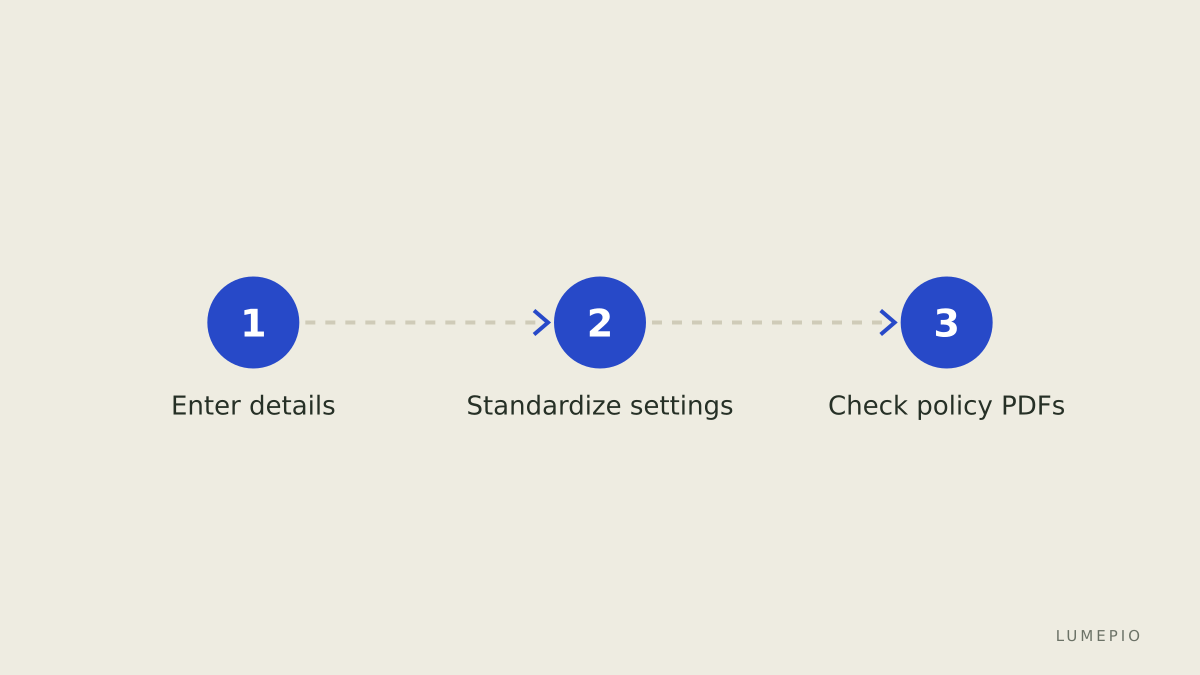
Steps to produce a reliable comparison:
Select the product type (OSAGO, KASKO, property) in the Polis selector and enter registration and vehicle or property value.
Standardize key settings: coverage limit, deductible amount, territory, and driver list; note these values before comparing.
Open each insurer’s policy wording PDF from the Polis result page and confirm exclusions such as wear-and-tear or driver age limits.
Save or screenshot the quote ID shown by Polis for later reference.
Concrete example with three live quotes (example comparison)
Below is a sample table showing three hypothetical offers pulled from Polis quote pages for the same vehicle profile and standardized limits; "Price (UAH)" values are taken from the insurer quote pages on Polis at the time of checking and are shown to illustrate comparison structure.
Insurer name | Policy type | Coverage limit (UAH) | Deductible (UAH) | Price (UAH, at the time of checking) | Source |
|---|---|---|---|---|---|
Example Insurer A | KASKO | 500,000 | 5,000 | 12,300 | |
Example Insurer B | KASKO | 500,000 | 10,000 | 9,800 | |
Example Insurer C | KASKO | 500,000 | 0 | 15,600 |
Decision rule: if your car is worth under 300,000 UAH and you expect low claim frequency, choose the lower-priced offer with a higher deductible; if you value no-deductible repairs, accept higher premium as shown by Example Insurer C in the table.
What to check in policy wording and why it matters
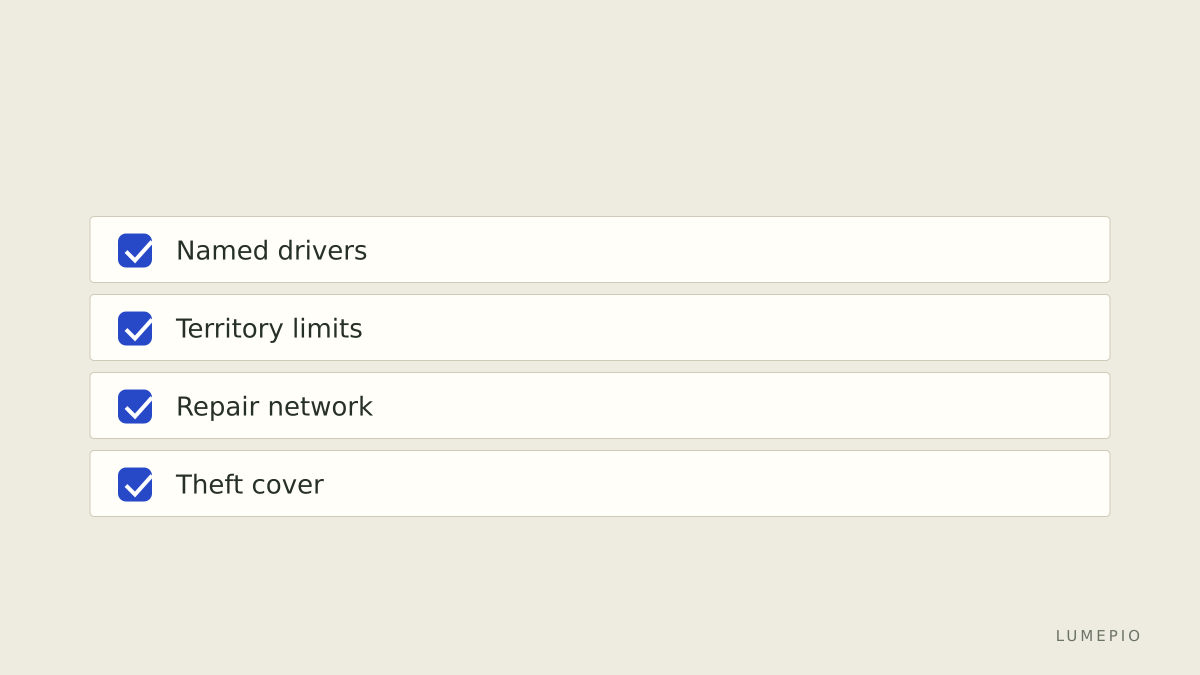
Check named drivers list and age limits (for example, some offers exclude drivers under 22) because Polis shows this field per quote; confirm theft and glass coverage are explicit if you require them. Verify repair network clauses – if the insurer limits repairs to partner garages within Kyiv only, and you travel regionally, that restriction affects claim convenience. Confirm whether replacement vehicle coverage is included and the maximum days provided.
Common exclusions to watch for:
Wear and tear or mechanical failure (exclude some repair claims).
Unlicensed drivers or alcohol-related incidents (often explicit).
Territorial limits (e.g., Ukraine-only).
Pricing mechanics and a practical decision rule
Polis combines insurer base tariffs with your inputs: vehicle age, declared value, owner’s age, and deductible. Expect price changes if declared value changes by more than 10 percent; when comparing, always use identical declared values. If the cheapest quote lacks an included glass or towing cover you require, add the cost of that add-on from the insurer’s page and then re-evaluate.
Quick decision rules:
If premium difference < 10% and one policy has zero deductible, pick the zero deductible.
If premium difference ≥ 25% choose the cheaper unless the cheaper policy misses a required cover such as theft.
If you drive commercially more than 15 hours per week, prefer policies that list commercial use explicitly.
Limitations, alternatives, and common mistakes
One honest limitation of Polis is that some insurer policy PDFs linked in results may use legal language that still requires reading the full insurer contract to confirm claim handling procedures. An alternative is to contact insurer customer service directly to confirm post-sale processes. Avoid comparing offers with different declared values, different driver lists, or different territorial settings. Do not rely only on price; verify repair network and third-party claim handling.
Conclusion – practical next steps
Checklist to act now: 1) run Polis quotes for the exact vehicle data; 2) standardize limits (e.g., 500,000 UAH coverage); 3) open each insurer policy PDF and note one exclusion and one included add-on; 4) pick the offer that meets your required cover with the lowest acceptable deductible and record the quote ID. For a direct start, open Polis and generate a quote now: Polis quote tool.
Sources list above includes Polis pages and an insurance primer for basic terms; prices and example figures were taken from Polis pages at the time of checking.






Start the conversation.