How to learn spanish – a realistic weekly plan to reach conversational Spanish
A practical, week-by-week guide for adult beginners and improvers. Combines focused self-study, measurable goals, and how to get the most from one-on-one lessons on italki to reach conversational Spanish.

Some links in this article lead to partner services. If you make a purchase there, the site may receive a commission; this does not affect the price or our assessment.
Your task: build a realistic 12-week plan that moves you from basic survival phrases to simple, on-topic conversations in Spanish. This guide gives weekly tasks, daily habits, and clear goals you can measure. It explains how to divide study time, what to practice on your own, and how to structure one-on-one lessons on italki so each lesson advances conversational ability.
The outcome and the rule of thumb
Define a clear, realistic target: after 12 weeks you should be able to hold 5–8 minute conversations on familiar topics (introductions, work, hobbies, travel logistics) with understandable pronunciation and the ability to ask for clarification. This is an improvement goal, not fluency.
Time budget rule of thumb:
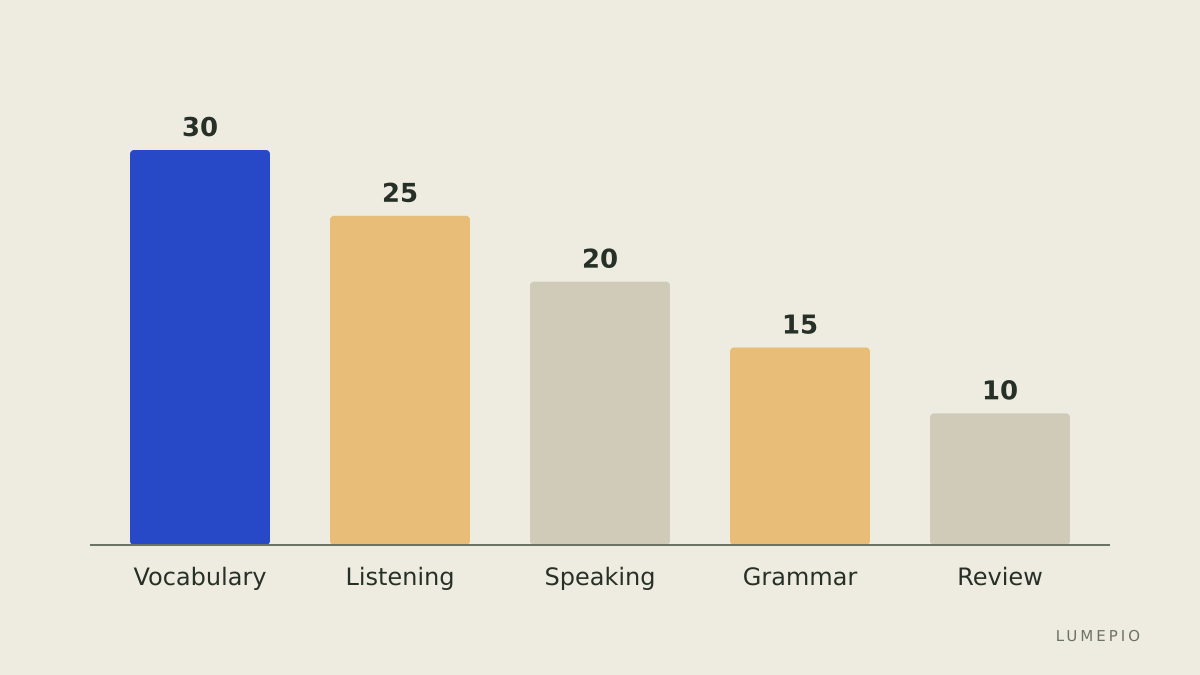
Beginners: 6–8 hours/week (4 hours self-study + 2–4 hours lessons/practice).
Improvers: 4–6 hours/week (3 hours self-study + 1–3 hours lessons/practice).
Decide which bucket you fit in and commit to the weekly hours. Progress comes from distributed, active practice and focused, short lessons rather than marathon sessions.
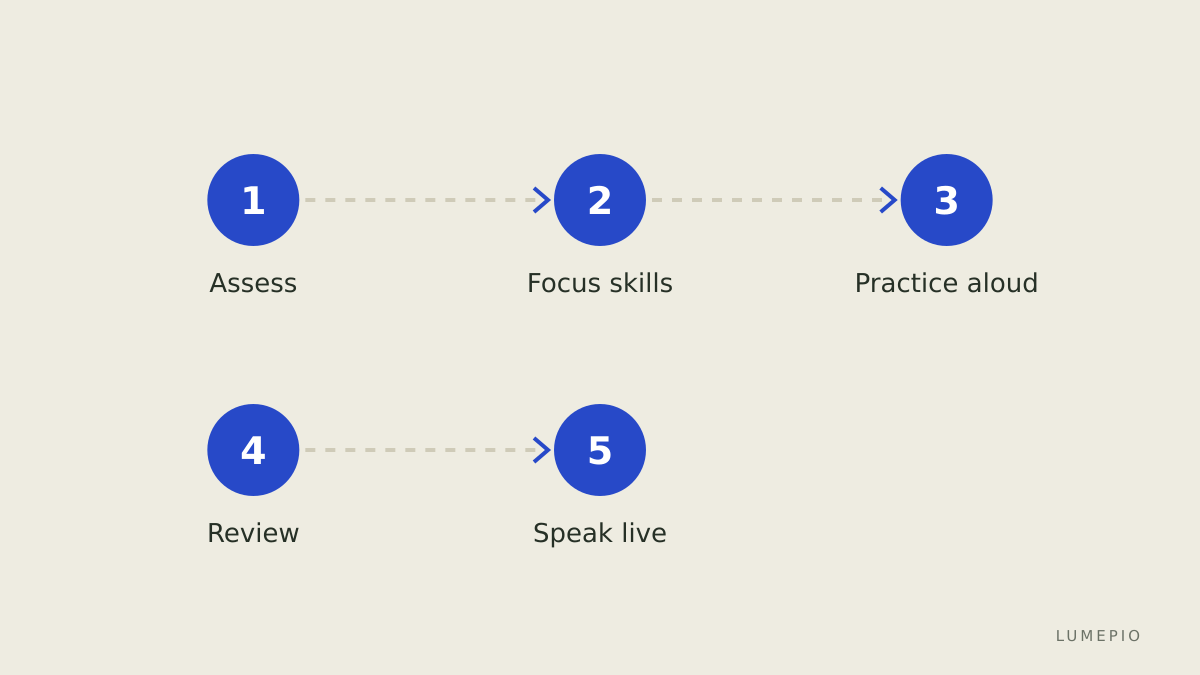
The weekly structure (12-week cycle)
Each week follows the same micro-structure so habits form. Swap topics but keep the template.
Template:
Monday: new vocabulary and grammar chunk (45–60 min).
Tuesday: listening + shadowing (30–45 min).
Wednesday: grammar drills + writing (45 min).
Thursday: vocabulary review + pronunciation (30 min).
Friday: italki lesson focused on using the week’s language (30–60 min).
Weekend: light review and input (films, podcasts, social media) (60–90 min spread).
Rotate topics (week 1 greetings & introductions, week 2 directions & transport, week 3 food & ordering, etc.). Each topic has a "can-do" goal you will practice in lessons.
What to do in your italki lessons
One-on-one lessons on italki should be goal-focused. Use them to activate language, not to passively receive explanations.
Decision rule for lesson types:
If you are a beginner (A0–A1), pick short lessons (30 minutes) that prioritize guided conversation and correction.
If you are improving (A2+), pick 45–60 minute slots where you can keep the teacher on-topic and do role-plays, story retellings, and error correction.
Lesson structure (30–60 minutes):
5 minutes: warm-up, recent practice, quick Q&A in Spanish.
10–15 minutes: controlled practice of the week’s grammar and vocabulary.
10–20 minutes: free conversation or role-play using target language.
5–10 minutes: focused feedback, 2–4 correction points, homework.
Use this checklist before each lesson:
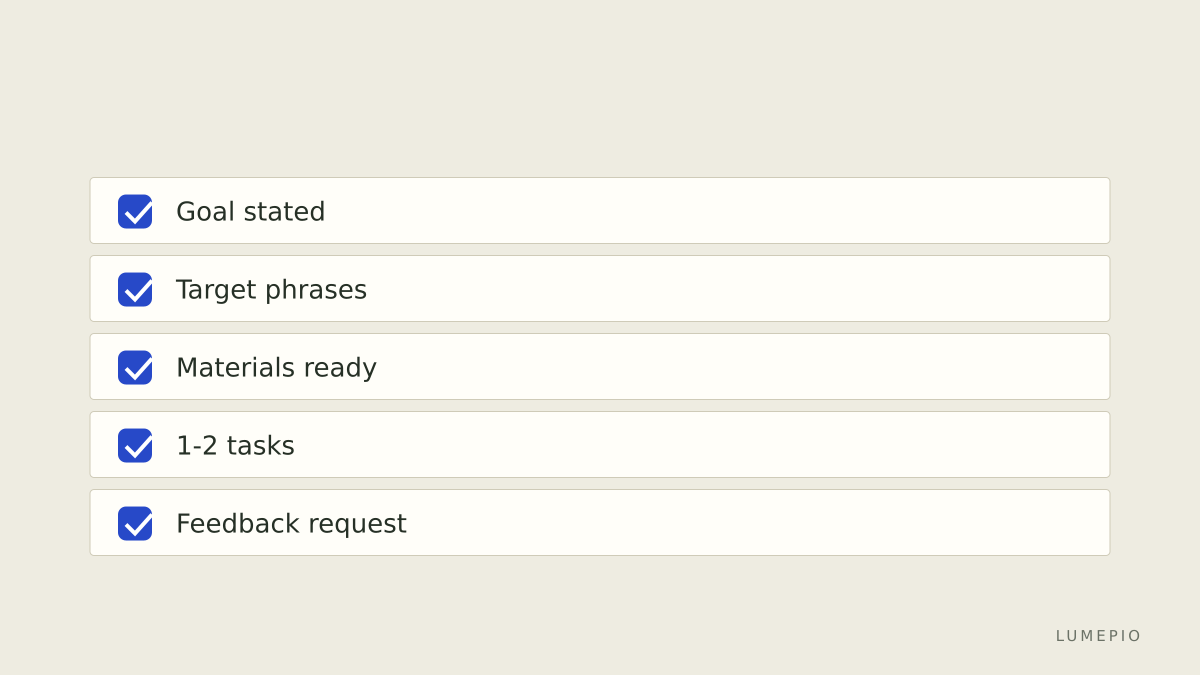
Prepare a 3-line "lesson brief" to send to the teacher before class: topic, 3 target phrases/sentences, and one skill to focus on (pronunciation, verb forms, or fluency).
Be concrete about corrections: ask the teacher to correct only pronunciation and verb mistakes, or only false friends, etc. That focused feedback is easier to apply.
Daily and weekly self-study actions
Concrete tasks reduce decision fatigue. Below is a weekly routine with short, high-impact activities.
Table: Daily routine and purpose
Day | Activity (time) | Purpose |
|---|---|---|
Mon | Learn 12–15 words + 1 grammar pattern (45–60m) | Build active phrase bank |
Tue | Listening + shadowing (30–45m) | Improve comprehension and rhythm |
Wed | Grammar drills + write 5 sentences (40–50m) | Accuracy and sentence production |
Thu | Vocabulary review (SRS) + tongue-twisters (30m) | Retention and pronunciation |
Fri | italki lesson (30–60m) | Activation and feedback |
Sat | Read short article or watch a scene (30–60m) | Input and context |
Sun | Speak for 5–10 minutes to self / review notes (20–30m) | Consolidation and planning |
Avoid the following mistakes:
Trying to learn too many new words at once. Stick to 12–15 new items weekly and make them useful phrases.
Treating lessons as passive. Plan the lesson and bring real tasks.
Skipping pronunciation early. Even basic sounds affect understanding.
Measuring progress and adjusting
Use concrete performance checks every three weeks.
Three-week check:
Can you sustain a 5-minute unscripted monologue on the current topic with pauses but recoverable meaning? Yes/No.
Can a teacher understand you without more than 30% repetition? Yes/No.
Are you consistently reviewing old vocabulary with an SRS (spaced repetition system)? Yes/No.
If two answers are No:
Increase lesson focus on pronunciation and fluency.
Reduce new vocabulary input and add review blocks.
Add one extra 20-minute speaking-practice session with a language partner or tutor.
Simple rubric for when to move to a harder topic:
You can use 12–15 core phrases from the week in new sentences.
You can ask and answer 6 basic questions about the topic.
You can self-correct one recurring mistake after a teacher points it out.
Choosing teachers and alternatives
Pick teachers who match your priorities: community tutors for conversation, professional teachers for structured grammar. Filter by:
Student reviews describing correction style.
Lesson length and cancellation policy that fit your schedule.
Sample videos or free trial options.
Honest limitation of italki: teacher quality varies because it is a marketplace, so you will need to try a few teachers to find a good match. An alternative platform you can consider is a local language school or university conversation group for in-person practice.
Table: Choosing teacher type
Teacher type | Best for | Typical lesson goal |
|---|---|---|
Community tutor | Conversation practice, low cost | Fluency and confidence |
Professional teacher | Structured learning, exams | Grammar and progression |
Native speaker exchange | Free practice, cultural notes | Spontaneous conversation |
Mistakes to avoid and concrete tips
Mistake: Treating translation as learning. Tip: learn phrases and sentence frames instead of isolated words.
Mistake: Only passive input. Tip: speak every other day, even to yourself, and record short clips to track progress.
Mistake: Skipping feedback. Tip: request targeted corrections and keep a running "error list" to review.
Quick practical tips:
Keep a one-page "survival sheet" with 30 phrases you can use in any conversation.
Record 60-second voice notes weekly and compare over time.
Use SRS for reviewed vocabulary; schedule review days into your calendar like appointments.
Conclusion and next steps
Start the 12-week cycle with a short assessment of your current level and commit to the weekly hours you can sustain. Use self-study to prepare and consolidate; use italki lessons to activate language, get corrections, and practice specific scenarios. After 12 weeks, re-evaluate with the three-week check rubric and set the next 12-week target.
Good next steps: sign up for a trial lesson, draft your first three-week topic list, and create your weekly calendar blocks for study and lessons. One alternative to online tutoring is joining a community language meetup for regular conversation practice.
Sources and further reading:
italki – the tutoring marketplace used in this guide: italki
Spanish language overview: Wikipedia – Spanish language
CEFR framework for level descriptions: Common European Framework of Reference for Languages
Free beginner tools and practice: Duolingo Spanish course