italki vs Preply: How the Two Tutoring Marketplaces Really Differ
italki sells lessons one at a time through prepaid credits; Preply sells a 28-day subscription with a weekly lesson slot. This comparison follows the money to show what each model means for commitment, cancellations and monthly budget.

Some links in this article lead to partner services. If you make a purchase there, the site may receive a commission; this does not affect the price or our assessment.
italki and Preply look almost identical on the surface: thousands of tutors, filters by language and price, video lessons, trial sessions. Feature-by-feature comparisons therefore tend to end in a draw. The real difference sits underneath, in how money moves from the learner to the tutor. italki is a pay-per-lesson marketplace built on prepaid credits. Preply is a subscription service billed every 28 days around a fixed number of lessons. Almost every practical difference, from how easy it is to quit to how you budget, follows from that one design decision.
How the money flows on each platform
italki. You top up an account with italki Credits, a platform currency pegged to the US dollar, and spend them lesson by lesson at whatever price the tutor lists. italki's own description is a pay-as-you-go model with no subscription, no monthly minimum and no lock-in. Tutors may offer packages of several lessons at a small discount, but buying a package is optional. Credits sit in your wallet until you use them, and italki notes that unused credits may expire after a year.
Preply. You book a trial lesson, then choose a subscription plan. Preply describes the plan as a recurring payment every 28 days that secures weekly lesson slots with your tutor. The help centre explains that the minimum plan is four lessons per cycle, that lessons not scheduled before the renewal date expire, and that the subscription can be paused once per cycle for up to 20 days. Preply's public pages describe plans from one to five hours a week.
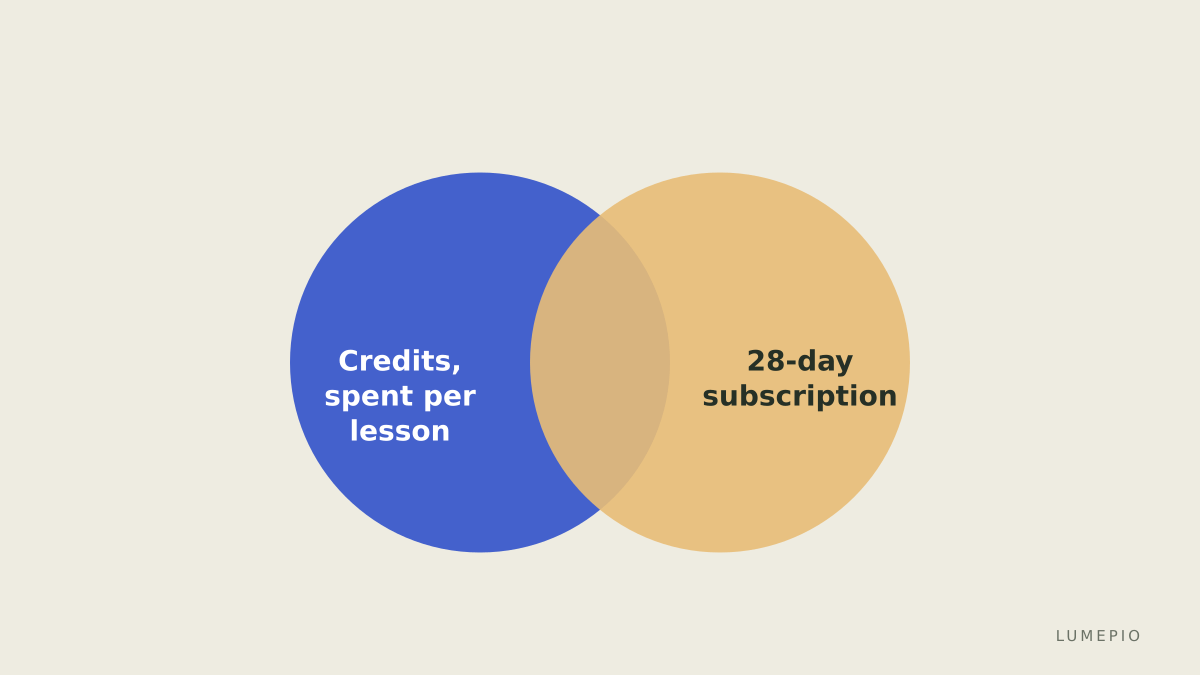
The distinction is not cosmetic. One model asks you to decide each time whether to take another lesson. The other asks you to decide once and then keep a rhythm.
What the models mean for commitment
A subscription is a commitment device. Preply's structure, a recurring charge and a weekly slot that repeats automatically, removes the friction of booking and adds the mild pressure of lessons that will expire if unused. For learners who know from experience that they stop practising when nobody expects them, that pressure is the point. It is the same reason people buy gym memberships rather than day passes.
Pay-per-lesson puts the decision back in your hands every week. On italki you can take three lessons one week and none the next without any cost beyond the lessons themselves. This suits learners with irregular schedules, people preparing for a specific exam date who want to intensify then stop, and anyone who prefers to try several tutors before settling. It also suits the learner who wants to combine a professional teacher for grammar with a cheaper community tutor for conversation, something italki's two-tier tutor structure is designed around.
Neither approach is better in the abstract. The question is whether you need external structure or resent it.
What the models mean for cancellations
Here the details matter more than the philosophy.
Situation | italki | Preply |
|---|---|---|
Cancelling a single lesson | Allowed up to 24 hours before the start; credits return to your wallet. Inside 24 hours the lesson cannot be cancelled or moved, and the tutor is entitled to payment | Weekly lessons can be rescheduled within the platform's rules; booked lessons remain yours even if you later cancel the subscription |
Stopping altogether | Nothing to cancel; simply stop booking. Leftover credits stay in the wallet, subject to expiry | Cancel at least a day before the billing date; no cancellation fee. Lessons already booked go ahead; unbooked lessons expire at the end of the 28-day cycle |
Taking a break | Do not book | Pause once per cycle for up to 20 days, requested before the next billing date |
Changing tutor | Book a different tutor; trial lessons are discounted with most tutors | Move remaining lessons to another tutor; after an unsatisfactory trial, switch for free or request a refund according to Preply's how-it-works page |
The italki 24-hour rule is strict, and it works the same for a trial as for a regular lesson. The Preply expiry rule is the one that catches people: a subscription whose lessons you forget to schedule before renewal is money spent on nothing, and the help centre says so plainly. Both platforms publish these rules and both can change them, so read the current version before your first payment.
What the models mean for budget
With italki, your monthly spend is the sum of the lessons you chose to take. italki's pricing guide describes lesson prices set by each tutor, with community tutors generally cheaper than professional teachers, and no booking fee added on top for students. A quiet month costs nothing. A busy month costs exactly what you booked. Budgeting is simple but requires discipline, since nothing stops you from booking too little.
With Preply, your monthly spend is fixed in advance and tied to the tutor's rate multiplied by your weekly hours. The predictability is the benefit; the risk is paying for lessons that expire because life intervened. The pause option softens this, but it must be used proactively.
A useful way to think about it:
If you will realistically take at least one lesson a week for several months, a subscription's fixed cost is not a penalty and the structure may help you keep going.
If your practice comes in bursts, or you are testing whether tutoring suits you at all, paying per lesson avoids paying for a routine you have not yet built.
Where each marketplace has weaknesses
italki's openness is also its weakness. Tutor quality varies widely because the barrier to entry for community tutors is low, and the platform's own material recommends taking two or three trial lessons before committing. Credits are prepaid, so you are lending the platform money until you spend it, and unused credits can expire. The 24-hour cancellation window is unforgiving for people whose days change at short notice. If those trade-offs are acceptable, you can browse tutors and book a discounted trial lesson on italki without any recurring charge.
Preply's subscription is a poor fit for irregular learners, and the expiry of unscheduled lessons is a genuine cost. Its structure also nudges you toward one tutor, which is efficient but reduces the variety that some learners want.
Both platforms take a commission from tutors rather than charging learners a visible fee, which means tutor list prices already include the platform's share. Alternatives worth knowing about include Verbling, Cambly for English conversation on a subscription, and local language schools that offer online private lessons at hourly rates.
Choosing by how you actually learn
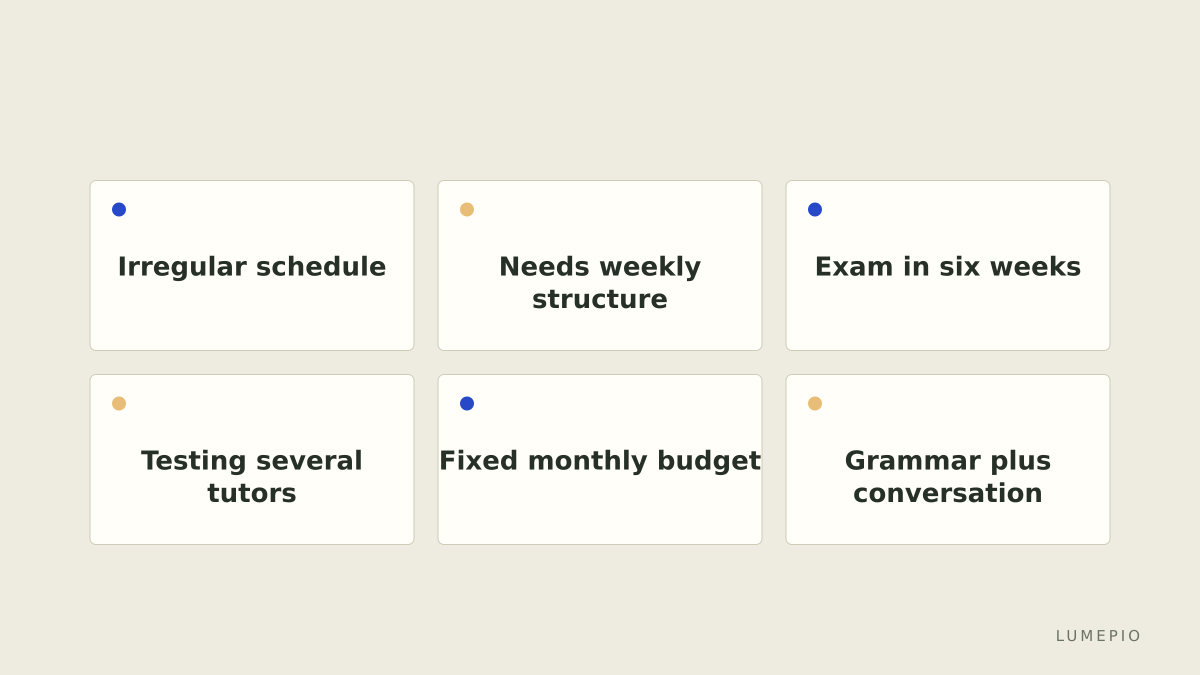
Ask three questions. Will you keep a weekly slot without being charged for it in advance? If not, a subscription is doing useful work. Do you want to mix tutors or intensify for a deadline? Pay-per-lesson gives that freedom. Do you prefer to see a predictable monthly figure or to pay only for what you use? Match the model to your honest answer rather than to the marketplace with the more familiar name.
For learners who want the freedom to start small, mix tutor types and stop without cancelling anything, italki's pay-per-lesson model is the more forgiving entry point. For learners who know they need the calendar to hold them, Preply's subscription exists precisely to do that. Availability, payment methods and pricing differ by country, so verify current terms on each platform's own site before you commit.
Sources
- https://www.italki.com/en/blog/what-is-italki
- https://www.italki.com/en/blog/italki-price
- https://support.italki.com/hc/en-us/articles/360022945974-How-to-cancel-a-lesson
- https://preply.com/en/how-it-works
- https://help.preply.com/en/articles/4966680-how-does-my-preply-subscription-work
- https://help.preply.com/en/articles/15432023-what-happens-when-i-cancel-my-subscription