The Best Time to Visit Egypt: Weather, Crowds and Nile Cruise Seasons by Month
A month-by-month guide to when Egypt is comfortable, when it is crowded and when the Nile cruise season runs, explaining why Cairo, Luxor, Aswan and the Red Sea coast each have a different best time and how to combine them in one trip.
Some links in this article lead to partner services. If you make a purchase there, the site may receive a commission; this does not affect the price or our assessment.
The best time to visit Egypt is a question with an easy short answer and a more useful long one. The short answer is winter: from November to February the whole country is mild and sunny, which is why that is also the busiest and most expensive season. The long answer is that Egypt is really three climates in one country, that the Nile cruise season follows a rhythm of its own, and that the trade-off between comfortable temperatures, thinner crowds and lower prices is different in each month. This guide walks through the year and then puts the pieces together.
Three Egypts
Egypt's weather divides along the river.
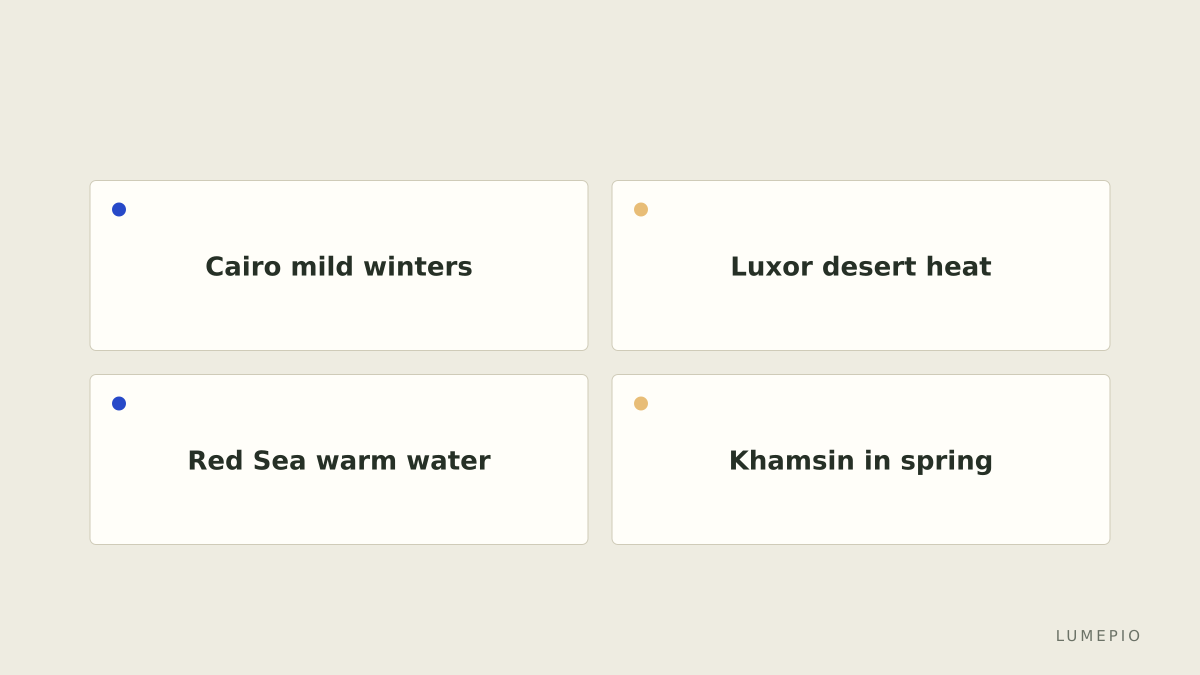
Cairo and the Delta. The capital has a mild winter and a long, hot summer. Climate references put winter daytime highs around 19 to 21°C and summer highs around 35°C, with roughly 55 mm of rain a year, almost all of it between November and March. Cairo is also where the spring khamsin wind, a hot, dry wind that can raise dust and sand, is most noticeable, typically between April and June.
Luxor and Aswan. Upper Egypt is desert. Luxor's climate normals show a January mean daily maximum of about 23°C and a mean minimum of about 7°C, rising to a July mean maximum above 41°C with nights around 26°C; annual rainfall is a few millimetres. The absolute record exceeds 50°C. This is where the great temple sites are, and where the season matters most, because touring open-air ruins at 40°C is an endurance exercise rather than a holiday.
The Red Sea coast. Hurghada and Sharm El Sheikh have winter highs around 21 to 22°C and summer highs of 35 to 38°C, moderated by the sea. Water temperature runs from about 21 to 23°C in January to March up to 27 or 28°C in July and August, which is why the coast has an almost inverted best season compared with Luxor.
The year, month by month
Month | Cairo | Luxor and Aswan | Red Sea | Crowds and prices |
|---|---|---|---|---|
January | Cool, occasional rain, chilly nights | Ideal days, cold early mornings | Cool for swimming, fine for diving | Peak season, highest prices |
February | Mild, still some rain | Ideal, warming | Cool water | Peak, very busy |
March | Warm, dust possible | Warm, comfortable mornings | Pleasant, water warming | High but easing |
April | Warm to hot, khamsin risk | Hot by midday, good early | Very good beach month | Moderate; Easter weeks busy |
May | Hot, khamsin risk | Very hot, dawn touring only | Warm sea, hot land | Low season begins |
June | Hot, dry | Extreme heat | Hot, sea warm | Low, lowest prices inland |
July | Hottest month | Extreme, over 40°C typical | Hot, sea at its warmest | Low inland, busy on coast |
August | Hot | Extreme | Hot, warmest water | Low inland, coast busy |
September | Hot, easing late | Very hot, easing | Warm, excellent for diving | Shoulder season starts |
October | Warm, pleasant | Hot but manageable, cruises resume in force | Excellent beach weather | Shoulder, good value |
November | Mild, ideal | Ideal | Warm, still good | High season begins |
December | Cool, some rain | Ideal, cold nights | Cool water | Peak, holiday surcharges |
Monthly descriptions summarise published climate normals; exact figures vary by year, and the holiday-period peaks shift with the calendar.
The table shows the tension clearly. The months that are ideal for Luxor are the months that are cool for swimming and expensive everywhere. The months that are cheapest inland are the months when Luxor is close to unbearable by noon.
Nile cruise seasons
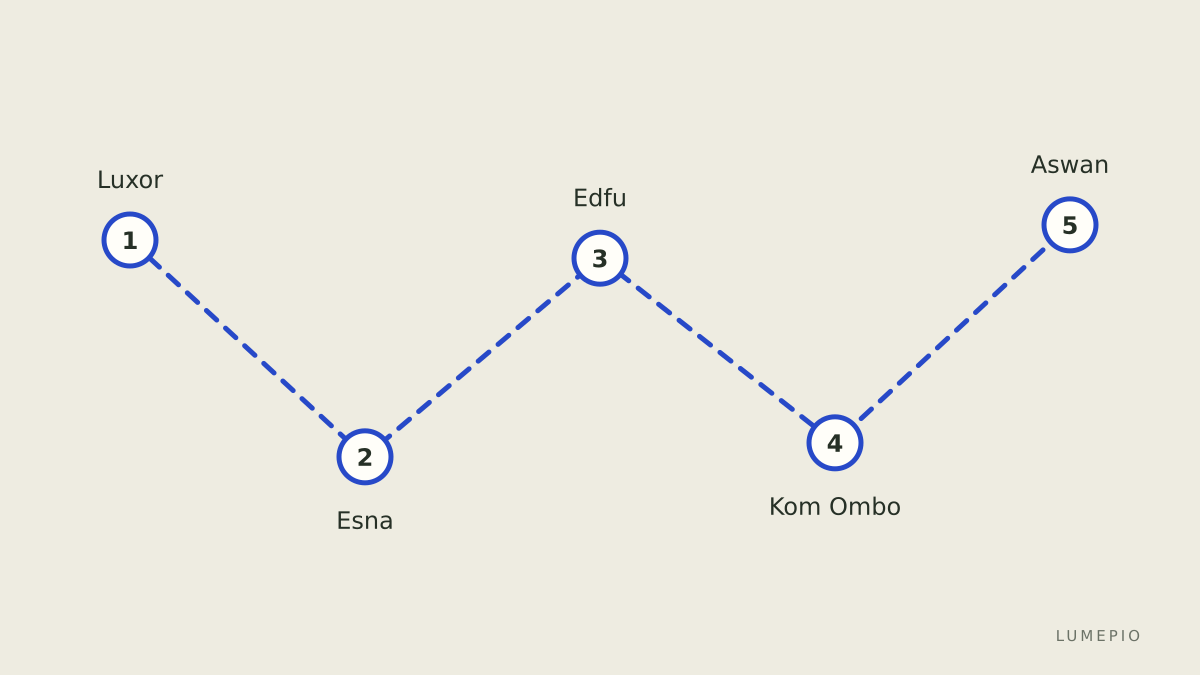
Most Nile cruises sail between Luxor and Aswan, stopping at Esna, Edfu and Kom Ombo and taking in Philae and the High Dam at Aswan, over three to four nights in one direction. Boats operate year-round, but the season has a shape. Operators such as Memphis Tours describe the comfortable cruising window as roughly October to April, with the high season concentrated in November to February, when daytime temperatures in Upper Egypt are pleasant and prices and boat occupancy are at their highest.
Within that window there are sub-seasons worth knowing.
October and March to April are the value months: warm rather than hot, boats running full schedules, prices below the winter peak.
Late December to early January carries holiday surcharges and the fullest boats; book months ahead.
May to September is when many boats reduce sailings or run at lower prices. Cruising is still possible, and the river itself is cooler than the sites, but shore excursions move to dawn and late afternoon.
One event shapes bookings in Aswan: the twice-yearly sun alignment at Abu Simbel, when sunrise reaches into the inner sanctuary. It happens around late February and late October; confirm the exact dates for your travel year, and expect the town to be full around them.
Crowds, holidays and Ramadan
Egypt's visitor pattern has two peaks: the European winter, especially around Christmas and New Year, and the Easter period. Outside those, February and November are busy but rarely uncomfortable. Sites such as the Valley of the Kings feel very different at 7 in the morning and at 11; in any month, the single most effective way to avoid crowds is to be at the gate when it opens.
Ramadan moves earlier each year by about eleven days and does not close the country to travellers, but it changes its rhythm. Cafes and shops adjust their hours, some sites shorten opening times, and evenings become lively after sunset. Some visitors love the atmosphere; others find the daytime pace frustrating. If you are sensitive to it, check when Ramadan falls in your travel year before fixing dates.
Putting a first trip together
For a first visit that combines Cairo, a cruise and a few days on the coast, the calendar suggests two sensible plans rather than one.
The classic winter plan (November to February). Cairo for two or three days, a Luxor to Aswan cruise, and the Red Sea for warmth rather than swimming. Comfortable everywhere on land, cool in the water, highest prices, most people.
The shoulder plan (October, or March to mid-April). The same route with warmer days, warmer sea and lower prices. Luxor is hot by midday, so temples move to the morning; the Red Sea is at its best. This is the plan for travellers who would rather trade a little heat for fewer coaches at Karnak.
Guided packages from operators such as Memphis Tours bundle the cruise, transfers and guides, which removes most of the logistics for a first trip. The limitation is flexibility: packaged itineraries follow fixed sailing days and fixed site rotations, and the price you see may not include entrance fees, tips or the internal flight to Aswan, so read the inclusions carefully and confirm availability and payment options for your country on the operator's site. Independent travellers can instead book a cruise directly with a boat operator or through a local agent in Luxor, and use the overnight train between Cairo and Upper Egypt, at the cost of arranging each piece themselves.
Conclusion
There is no single best time to visit Egypt, but there is a best time for each part of it, and the year rewards travellers who choose deliberately. Winter is the safe choice for temples and the crowded one for everything. October and spring give warmer water, lower prices and manageable heat if you tour early. Summer belongs to the Red Sea. Decide which Egypt you most want to see well, pick the season that suits it, and let the other parts of the trip fit around that. If a package suits you, compare the inclusions on Memphis Tours against the season you have chosen before you book.