Fiverr vs Upwork: How Each Marketplace Works for Beginners and for Buyers
Fiverr sells fixed-price gigs that buyers browse; Upwork runs job posts that freelancers bid on. This explainer walks through both models from the seller side and the buyer side, and shows how each platform earns its fees.

Some links in this article lead to partner services. If you make a purchase there, the site may receive a commission; this does not affect the price or our assessment.
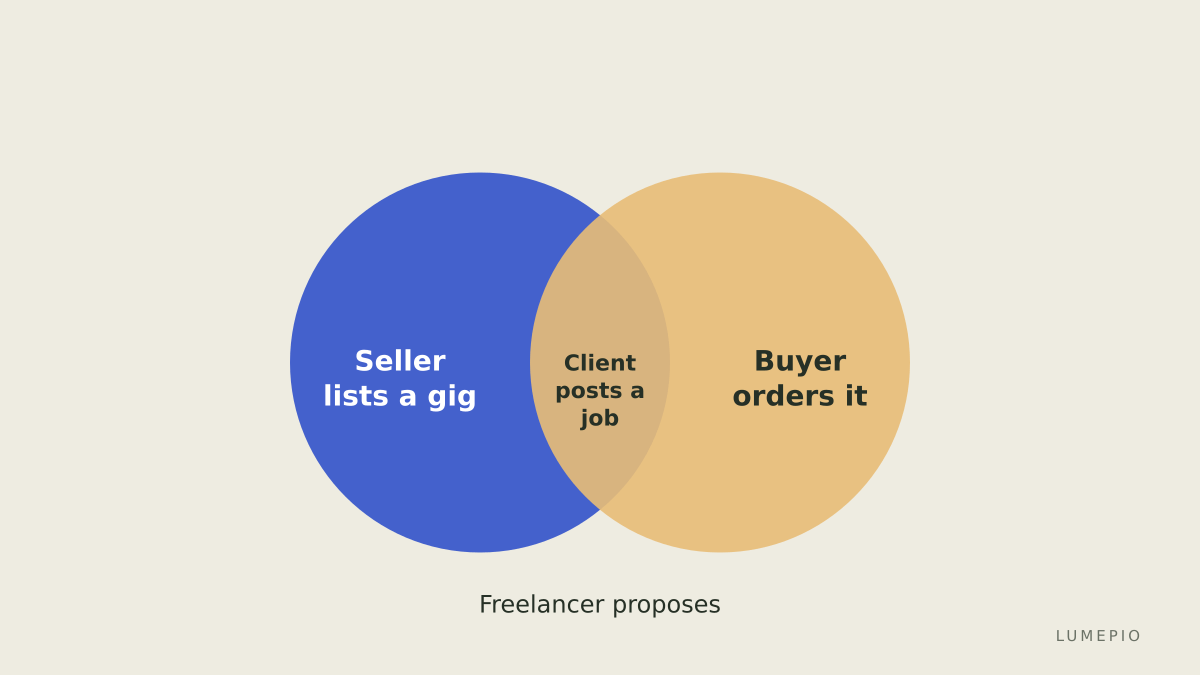
Fiverr and Upwork are usually compared as if they were two versions of the same thing. They are not. Fiverr is a catalogue of products, where the product happens to be a service; Upwork is a labour market, where work is described first and matched afterwards. Almost every practical difference, from how a beginner gets a first client to how a buyer controls cost, follows from that one distinction. This piece explains both models from each side of the transaction.
Two models in plain terms
Fiverr: the gig model. A seller creates a listing, called a gig, that describes a fixed service with a fixed price, usually in three package tiers with defined deliverables and delivery times. Buyers search the catalogue, compare gigs the way they compare products, and order. The name comes from the US$5 price that every gig carried when the platform launched in 2010; today services start at that level and run to thousands of dollars. The seller does not apply for anything. The listing does the selling while the seller sleeps.
Upwork: the proposal model. A client writes a job post describing the work and a budget or hourly range. Freelancers submit proposals, spending a platform currency called Connects to do so, and the client interviews and hires one or more of them. Upwork traces its lineage to Elance (1998) and oDesk (2003), which merged in 2013 and took the Upwork name in 2015. Here the client does the describing, and the freelancer does the applying.
The seller's view
For a new freelancer the models feel completely different.
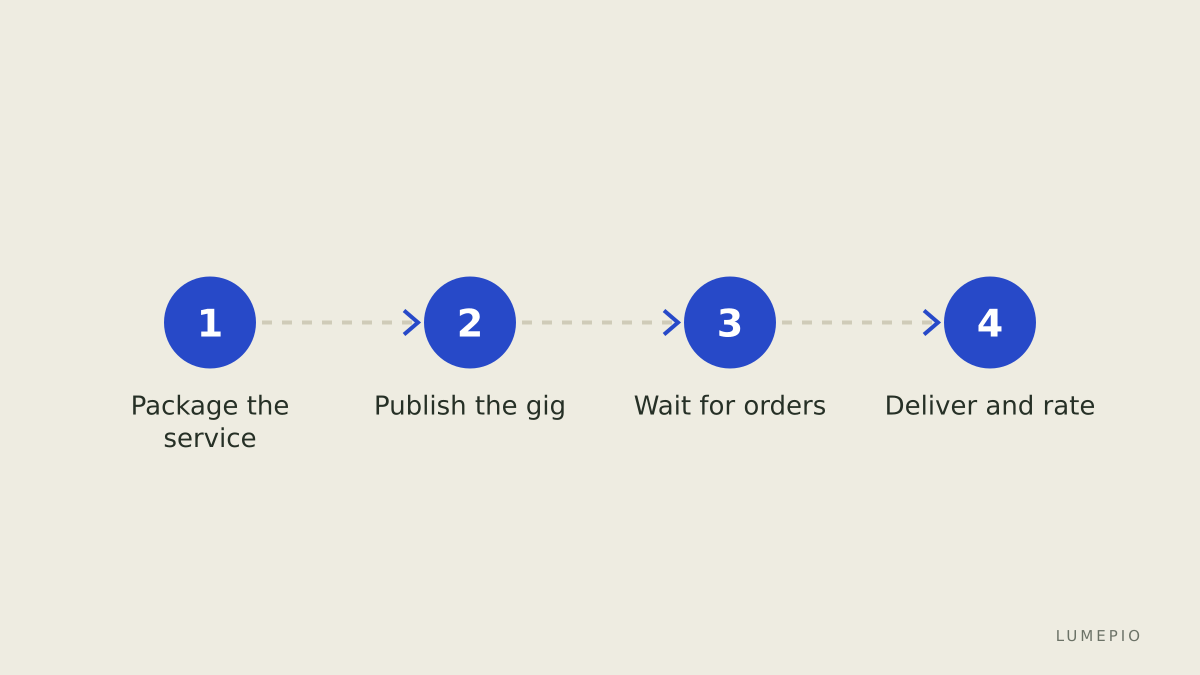
On Fiverr the work is front-loaded. You write a gig that anticipates what buyers want, price it in packages, add samples and wait for search traffic. Nothing happens until the algorithm shows your gig to someone, which for a new seller can take weeks. Once orders start, though, each one arrives already scoped and paid into escrow. Fiverr also runs a level system (new seller, then successive levels up to top rated) that rewards consistent ratings, response times and completed orders with more visibility and more gig slots.
On Upwork the work is continuous. You browse job posts daily, write a tailored proposal for each one that fits, and spend Connects to submit it. A basic account receives a monthly allowance of free Connects; additional ones are purchased. You will write many proposals that go nowhere. The upside is that you can describe your fit to a specific problem, negotiate scope, and land hourly contracts that last months, which the gig catalogue does not really support.
The difference in a sentence: Fiverr rewards people who can package a service; Upwork rewards people who can write a persuasive, specific pitch and tolerate rejection.
The buyer's view
Buyers experience the mirror image.
A small business owner on Fiverr shops. They type "logo design", filter by budget and delivery time, read reviews, and order a package in minutes. The price is known before contact, and the scope is whatever the gig says. This is excellent for small, well-defined tasks and poor for anything ambiguous, because a buyer who does not know exactly what they need cannot pick the right package.
The same owner on Upwork hires. They write a post, receive proposals within hours, shortlist, interview and agree either a fixed price with milestones or an hourly rate tracked through Upwork's time-logging tool. This takes longer and requires the buyer to describe the work well, but it suits projects where the scope will evolve, where the buyer wants to see the person's thinking before committing, or where an ongoing relationship is the goal.
How each platform earns
Both platforms charge both sides, but the shape differs, and the exact percentages change; the figures are published in each company's help centre and shown at checkout or at proposal time.
Fee element | Fiverr (gig model) | Upwork (proposal model) |
|---|---|---|
What the freelancer pays | A percentage commission on every order, deducted before payout | A service fee per contract, expressed as a percentage of earnings; Upwork's help centre states the applicable rate is shown when the freelancer submits a proposal or receives an offer |
What the buyer pays | A service fee added on top of the gig price at checkout | A marketplace or contract fee added to payments; some clients also pay payment-processing charges |
Cost to apply | None; listing a gig is free | Connects are spent per proposal; a free monthly allowance, then paid bundles |
Optional paid visibility | Promoted gigs | Boosted proposals, Freelancer Plus subscription |
When money moves | Buyer pays upfront into escrow; seller paid after clearance period | Fixed-price milestones funded in escrow; hourly billed weekly with payment protection |
Two consequences follow. On Fiverr a seller's cost is predictable and only incurred when an order is made. On Upwork a freelancer spends money, through Connects, before earning anything, which is a real barrier for beginners with no track record and a real filter that keeps proposal volume manageable for clients. Check the current rates on each platform before pricing your work; both have revised their fee structures several times over the years, and the historical figures quoted around the web are often out of date.
Which model suits whom
Situation | Better fit | Why |
|---|---|---|
Beginner with a repeatable skill (thumbnails, transcription, short copy) | Fiverr | A packaged gig can sell without a pitch |
Beginner with a consulting or development skill | Upwork | Scope needs conversation; hourly contracts exist |
Buyer with a small, well-defined task | Fiverr | Fixed price, minutes to order |
Buyer with an ambiguous or long project | Upwork | Interviews, milestones, hourly tracking |
Freelancer who hates writing proposals | Fiverr | The listing is written once |
Freelancer who wants to choose clients | Upwork | You decide what to apply for |
Honest limitations
Fiverr's model has costs that are easy to underplay. New gigs can sit invisible for weeks, since the catalogue is crowded and visibility depends on performance signals a new seller does not yet have. The package structure penalises work that does not fit a fixed scope, and revisions can eat the margin on a low-priced gig. The commission is deducted from tips as well as orders. And because the buyer arrives with a fixed expectation, disputes about scope are common.
Upwork's model has the opposite problems: the cost of Connects before any income, the time spent on unanswered proposals, and heavy competition on low-budget posts. Neither is the only option. Direct outreach, local business networks and specialist marketplaces such as Toptal for vetted developers or 99designs for design contests all avoid the general-marketplace crowd, at the price of doing your own marketing.
Conclusion
Fiverr and Upwork are not rivals offering the same thing at different prices; they are two different mechanisms for matching work to people. The gig model turns a service into a product that sells itself, which is why a beginner with a packageable skill often gets a first sale sooner on Fiverr. The proposal model turns hiring into a conversation, which is why buyers with real projects and freelancers with consulting skills often prefer Upwork. Many freelancers eventually use both: a gig storefront for the repeatable work and proposals for the larger engagements. Understanding which model you are operating in is the first step to using either one well.